
Oilfield geostatistics is a specialized field within the oil and gas industry that applies statistical methods to spatially analyze and model subsurface geological data. This discipline is crucial for characterizing reservoir heterogeneity and uncertainties, providing valuable insights into the distribution of rock properties, fluid saturation, and other critical parameters. Geostatistical techniques, such as kriging, variogram analysis, and simulation, are employed to interpolate and model spatial relationships in the subsurface. By integrating geophysical, well log, and other data sources, geostatistics helps in creating realistic three-dimensional models of reservoirs. These models guide decisions related to well placement, reservoir management, and production optimization. Geostatistics also plays a significant role in uncertainty quantification, allowing for the assessment of risk and the development of robust strategies for oil and gas exploration and development. Advances in computational capabilities and data analytics contribute to the continued evolution of geostatistical methods, enhancing their accuracy and applicability in the dynamic and complex field of subsurface reservoir characterization.
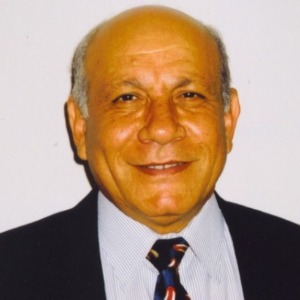
Selim Sanad Shaker
Geopressure Analysis Services, United States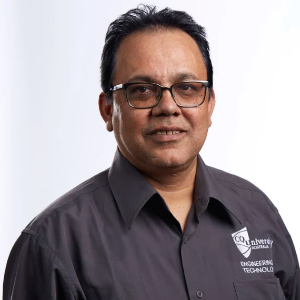
Nur Hassan
Central Queensland University, Australia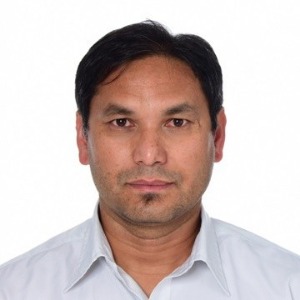
Hem Bahadur Motra
University of Kiel, GermanySubmit your abstract Today


Title : Beyond decarbonization: Incorporating social value and productive inclusion in the energy transition
Deinar Agudelo Ortiz, Natural Motos sas, Colombia
Title : Multi-scale evaluation of mechanical properties of the geomaterials
Hem Bahadur Motra, University of Kiel, Germany
Title : A novel geomechanical workflow for well design optimization through a new approach in friction coefficient estimation, a case study from West Delta Deep Marine Concession, Mediterranean Sea, Egypt
Akram Sami Elsherbiny Ali Hussein, Rashid Petroleum Company, Egypt
Title : An integrated and scalable workflow for evaluating polymer flooding and conformance control strategies in heterogeneous waterflooded reservoirs
Farah Faiz, SLB Digital, Colombia
Title : The removal and recovery of dissolved oil from high-salinity wastewater using reduced graphene oxide-iron oxide nanocomposites
Rukiye Oztekin, Dokuz Eylül University, Turkey
Title : HALP system: An edge-AI and two-tier architecture for cost-effective structural health monitoring in extreme industrial environments
Menna Allah Abdelnabi Mohamed Ali, Higher Institute for Engineering in Belbeis, Egypt