
In recent years, the aviation industry has been increasingly focused on sustainable solutions to mitigate its environmental impact. Sustainable aviation biofuels, derived from renewable sources such as algae, biomass, and waste oils, have emerged as a promising alternative to traditional jet fuels. These biofuels offer a significant reduction in carbon emissions compared to conventional aviation fuels, making them a key component in achieving the industry's carbon neutrality goals. The International Conference on Oil, Gas, and Petroleum Engineering provides a platform for researchers, engineers, and industry professionals to explore the latest advancements in sustainable aviation biofuels. Through collaborative efforts and knowledge-sharing, the conference aims to drive innovation in biofuel production, distribution, and utilization, paving the way for a more sustainable future for the aviation sector.
At the heart of sustainable aviation biofuels lies the imperative to balance environmental stewardship with economic viability and technological feasibility. Researchers and stakeholders at the International Conference on Oil, Gas, and Petroleum Engineering delve into the multifaceted aspects of biofuel development, including feedstock selection, refining processes, and performance evaluation. By addressing key challenges such as scalability, cost-effectiveness, and regulatory frameworks, participants aim to accelerate the adoption of sustainable aviation biofuels on a global scale. Through collaborative discussions, innovative solutions emerge, fostering partnerships between industry leaders, government agencies, and academic institutions. Ultimately, the conference serves as a catalyst for advancing sustainable aviation biofuel technologies, driving progress towards a greener and more sustainable aviation industry.
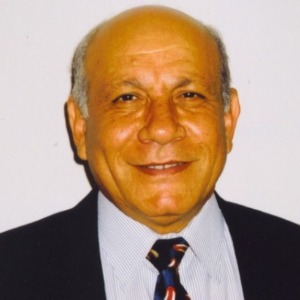
Selim Sanad Shaker
Geopressure Analysis Services, United States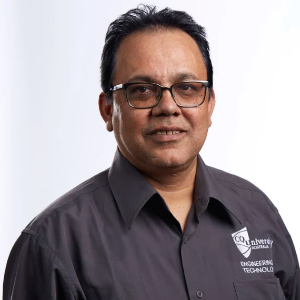
Nur Hassan
Central Queensland University, Australia
Hem Bahadur Motra
University of Kiel, GermanySubmit your abstract Today


Title : Beyond decarbonization: Incorporating social value and productive inclusion in the energy transition
Deinar Agudelo Ortiz, Natural Motos sas, Colombia
Title : Multi-scale evaluation of mechanical properties of the geomaterials
Hem Bahadur Motra, University of Kiel, Germany
Title : A novel geomechanical workflow for well design optimization through a new approach in friction coefficient estimation, a case study from West Delta Deep Marine Concession, Mediterranean Sea, Egypt
Akram Sami Elsherbiny Ali Hussein, Rashid Petroleum Company, Egypt
Title : An integrated and scalable workflow for evaluating polymer flooding and conformance control strategies in heterogeneous waterflooded reservoirs
Farah Faiz, SLB Digital, Colombia
Title : The removal and recovery of dissolved oil from high-salinity wastewater using reduced graphene oxide-iron oxide nanocomposites
Rukiye Oztekin, Dokuz Eylül University, Turkey
Title : HALP system: An edge-AI and two-tier architecture for cost-effective structural health monitoring in extreme industrial environments
Menna Allah Abdelnabi Mohamed Ali, Higher Institute for Engineering in Belbeis, Egypt